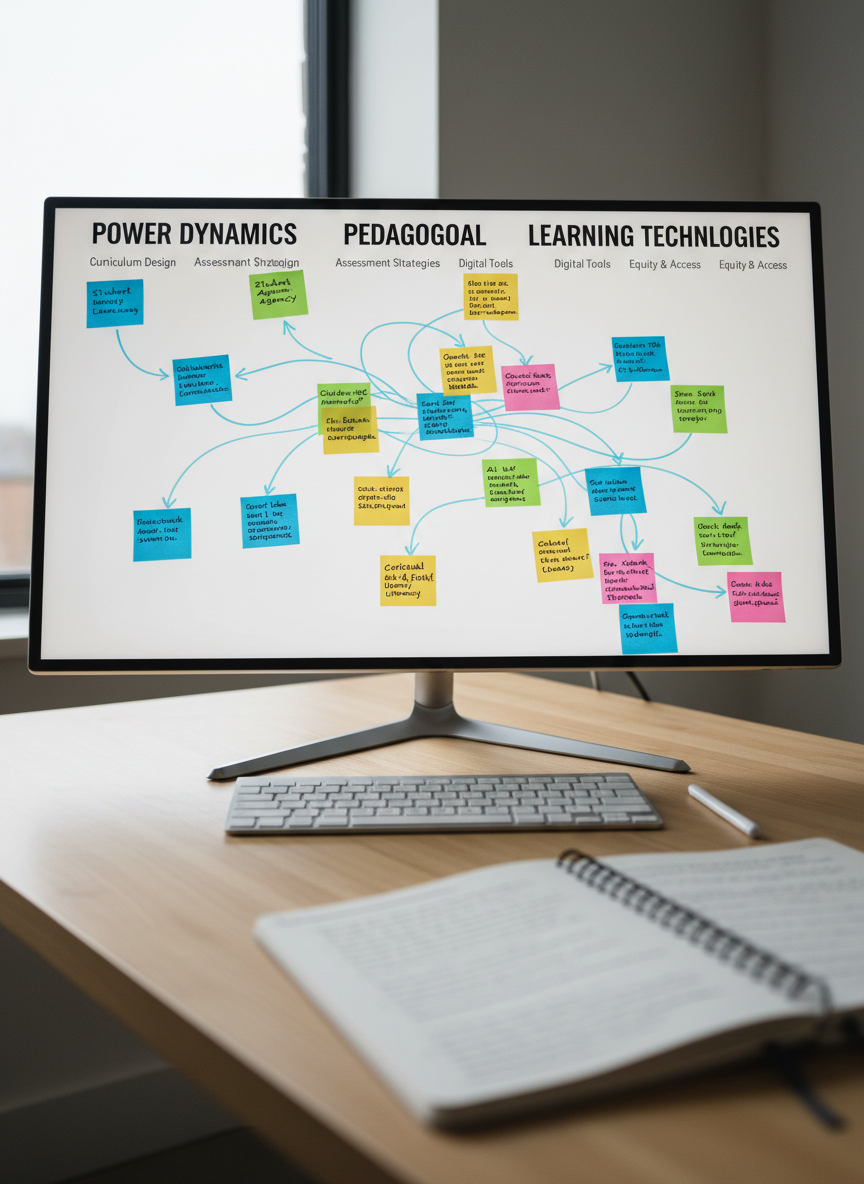
A large digital whiteboard displayed on an ultra-thin monitor, covered in colorful virtual sticky notes, flow arrows, and neatly typed headings about power, pedagogy, and learning technologies. The monitor stands on a clean, minimalist desk made of light ash wood, accompanied by a slim wireless keyboard and a stylus resting beside a small notebook filled with dense handwritten reflections. Cool, diffused overcast light comes from a nearby window, casting soft, even illumination with almost no harsh shadows. Photographic realism, framed using the rule of thirds from a slightly elevated angle, with crisp focus on the digital whiteboard and a gentle bokeh softening the rest of the workspace. The atmosphere feels analytical yet creative, ideal for reflective research planning.

Reflective Researcher

Reflections on the evolving relationship between technology, pedagogy, and the power structures that shape educational experience.

About

I’m interested in how digital platforms including GenAI, datafication, and the policies wrapped around them shape who holds power in learning spaces. My work weaves together critical pedagogy, thoughtful learning design, and educational technology to champion equity, care, and learner agency.
A sleek, open laptop with a matte black finish and a luminous blank document on screen, resting on a pale wooden desk. Around it, neatly stacked academic books on learning technologies and a slim tablet with handwritten annotations glow softly. A clear glass mug of tea sits on a cork coaster, steam barely visible. Soft morning daylight enters from an unseen window to the left, creating gentle shadows and subtle reflections on the laptop keys. Photographic realism, shot at eye level with a shallow depth of field, the background fading into a blurred bookshelf. The mood is contemplative and professional, suggesting quiet research and reflective digital pedagogy work.
An overhead shot of a polished white desk displaying an arrangement of digital research tools: a tablet showing a highlighted academic PDF, a smartphone screen with a citation manager open, and a laptop running a learning management system interface. Between them, a lined notebook lies open, filled with tidy handwritten reflections in dark ink and a fine-point pen resting diagonally. Soft golden hour light washes across from the right, creating warm highlights on the metallic edges of devices and casting elongated, calm shadows. Photographic realism with sharp focus throughout, emphasizing the orderly yet active research environment. The mood is focused and methodical, evoking thoughtful engagement with digital pedagogy scholarship and tools.

Short biography

Hi, I’m Felicia Heard a PhD student in E‑Research and Technology‑Enhanced Learning with a fascination for how emerging technologies are transforming education.

My work focuses on the rapidly evolving role of AI in academic assessment, especially within higher education. I’m particularly interested in how AI-driven changes shape institutional policies and what they mean for both teacher and student agency. Much of my research centres on the experiences of international students, who often navigate additional linguistic and cultural challenges when studying at UK universities.

Before starting my PhD, I spent many years teaching English for Academic Purposes (EAP) to international students, and I continue to work as a tutor and module convenor at a UK university. Their lived experiences remain central to my research as I’ve witnessed how international students navigate new academic expectations and how emerging technologies can both support and complicate their learning journeys.

With generative AI tools like ChatGPT, Gemini, Claude, and Copilot now woven into everyday academic life, the landscape is shifting faster than ever. I’m driven to understand not just how these tools are used, but how they reshape the very meaning of authorship, assessment, and academic integrity, and what this means for the future of teaching and learning.