Why Researching EdTech Matters
I study how learning technologies shape power and agency, asking whose needs they serve and whose voices are ignored.


Reflections
-
Exploring AI Literacy Through Change Laboratory Workshops
Over the past few months, my colleagues and I at a UK university have been running a series of small‑scale Change Laboratory workshops to explore how students are engaging with generative AI (GenAI) in their learning and assessments. What started as a focused inquiry into the experiences of international students quickly grew into something much broader and far more insightful than we initially expected.
Our original intention was to better understand how international students navigate GenAI tools in an unfamiliar academic culture. However, as interest in the workshops spread, home students also joined the sessions. What surprised us was how similar the experiences were across both groups. Whether students were navigating higher education in a second language or had grown up in UK academic systems, their questions, uncertainties, and strategies around using GenAI found common ground. This commonality became one of our early findings: GenAI isn’t just reshaping the learning experiences of particular student groups. It’s reshaping everyone’s relationship with academic work.
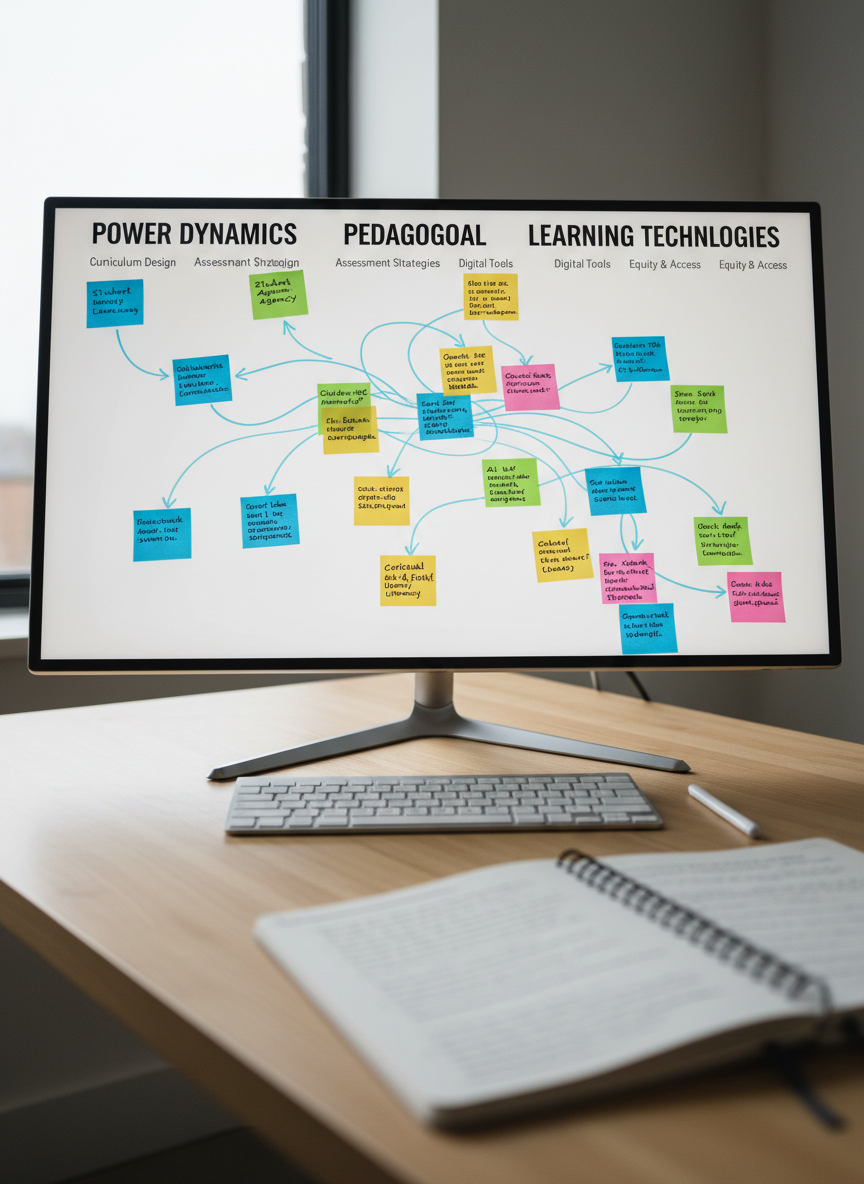
As this was my first time facilitating Change Laboratory workshops, I didn’t quite know what to expect. The Change Laboratory method grounded in activity theory and expansive learning invites participants to analyse and redesign their own practice systems. Even on a small scale, the process was profound. The volume and depth of data generated over just a few sessions exceeded anything I had anticipated. Students were not passive participants; they were co researchers. They mapped activity systems, debated contradictions, and surfaced tensions that might otherwise remain invisible in more traditional research approaches.
Perhaps the most memorable aspect of the project was witnessing the degree of agency students exercised throughout the process. They didn’t simply share experiences of using GenAI as they actively interrogated them.
Across the workshops, students:
• Collaboratively reconstructed their activity systems, identifying how GenAI tools fit (or failed to fit) within their workflows.
• Explored primary and secondary contradictions, such as unclear institutional guidelines, assessment expectations, and personal ethical concerns.
• Proposed practical, thoughtful solutions, ranging from clearer assessment briefs to explicit guidance on responsible AI use.
Their reflections challenged the common narrative that students approach GenAI uncritically. Instead, what we saw was a nuanced, reflective, and often deeply ethical engagement with the technology.These early insights highlight the value of participatory, developmental approaches in navigating emerging technologies in education. When students are given space to articulate their experiences and shape the discussion, the resulting insights are richer and more grounded in lived reality than top down approaches often allow.
The Change Laboratory methodology has proven especially powerful in this context. It not only surfaces contradictions but also supports students in envisioning realistic, constructive pathways forward and something increasingly important as universities grapple with how to respond to rapid technological change.What’s next?
We’re now preparing to share the outcomes of this work through upcoming conference presentations, and we’re also considering a publication based on our initial findings. Our working title:
AI Literacy and Responsible Use Amongst International Students in Higher Education
There is still much to unpack, and we are excited about how this project may evolve. As GenAI continues to embed itself into every corner of higher education, understanding students’ perspectives, and giving them a platform to help shape institutional approaches feels more important than ever.I’m incredibly grateful to the students who contributed their time, insight, and creativity. Their openness and willingness to critically examine their own learning practices have shaped this project into something truly meaningful. I’m looking forward to where this work leads next.


 The Reflective Researcher